
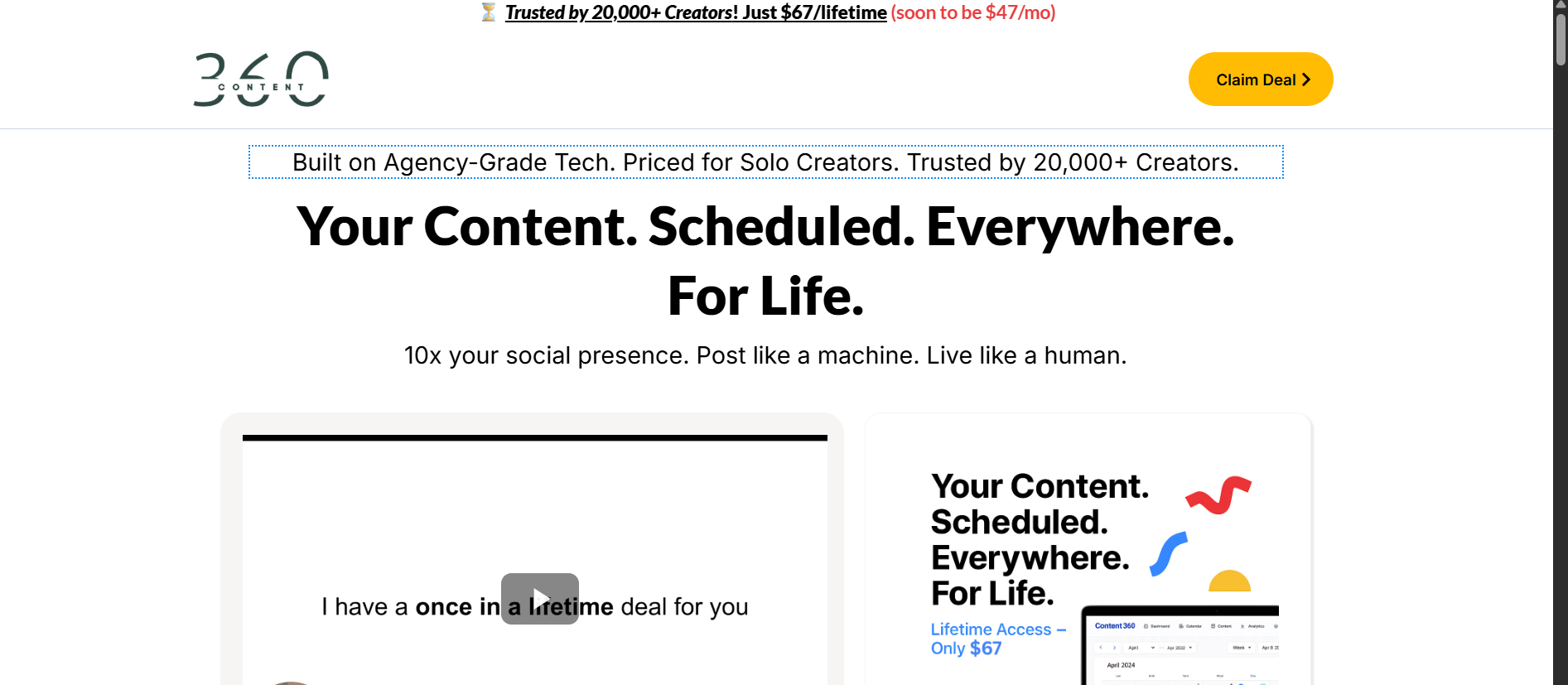
Content360 addresses a core problem for creators who publish across multiple platforms: the overhead of managing separate posting schedules, adapting content to different formats, and tracking what's actually performing. By centralising scheduling, repurposing, and analytics into one tool, Content360 lets creators spend less time managing logistics and more time creating.
Multi-channel scheduling. plan and schedule posts across YouTube, Instagram, TikTok, Twitter, and LinkedIn
Content calendar. visual calendar view for planning your publishing schedule weeks ahead
Content repurposing. transform existing content into different formats for different platforms automatically
Analytics dashboard. track reach, engagement, and performance across all channels in one place
Team collaboration. assign tasks, review content, and approve posts with built-in workflows
Content library. store and organise your assets, drafts, and published content in one searchable hub
Who Is It For?
Marketing teams, agencies, and content creators who manage high-volume content production across multiple channels and need a centralised planning, scheduling, and approval workflow. Particularly useful for teams where content passes through multiple reviewers before publication.
Solo creators who manage a single channel without a team approval process will find the collaborative features unnecessary. Simpler scheduling tools without the overhead of a content management workflow will be more appropriate.
Pros and Cons
- ✅ Centralised content calendar and workflow management
- ✅ Team collaboration and approval workflows
- ✅ Multi-channel scheduling from one dashboard
- ✅ Good for agencies managing multiple client accounts
- ❌ Overkill for solo creators without team workflows
- ❌ Pricing reflects a professional tool rather than an individual creator solution
- ❌ Workflow setup takes initial time investment
Pricing
Content360 is a professional tool — check the website for current pricing tiers based on team size and usage.
Summary
Content360 solves real problems for content teams that need structured workflows, shared calendars, and approval processes across multiple channels. For solo creators, it is more than needed. For marketing teams or agencies, the structure it provides can significantly reduce the chaos of high-volume multi-channel content management.