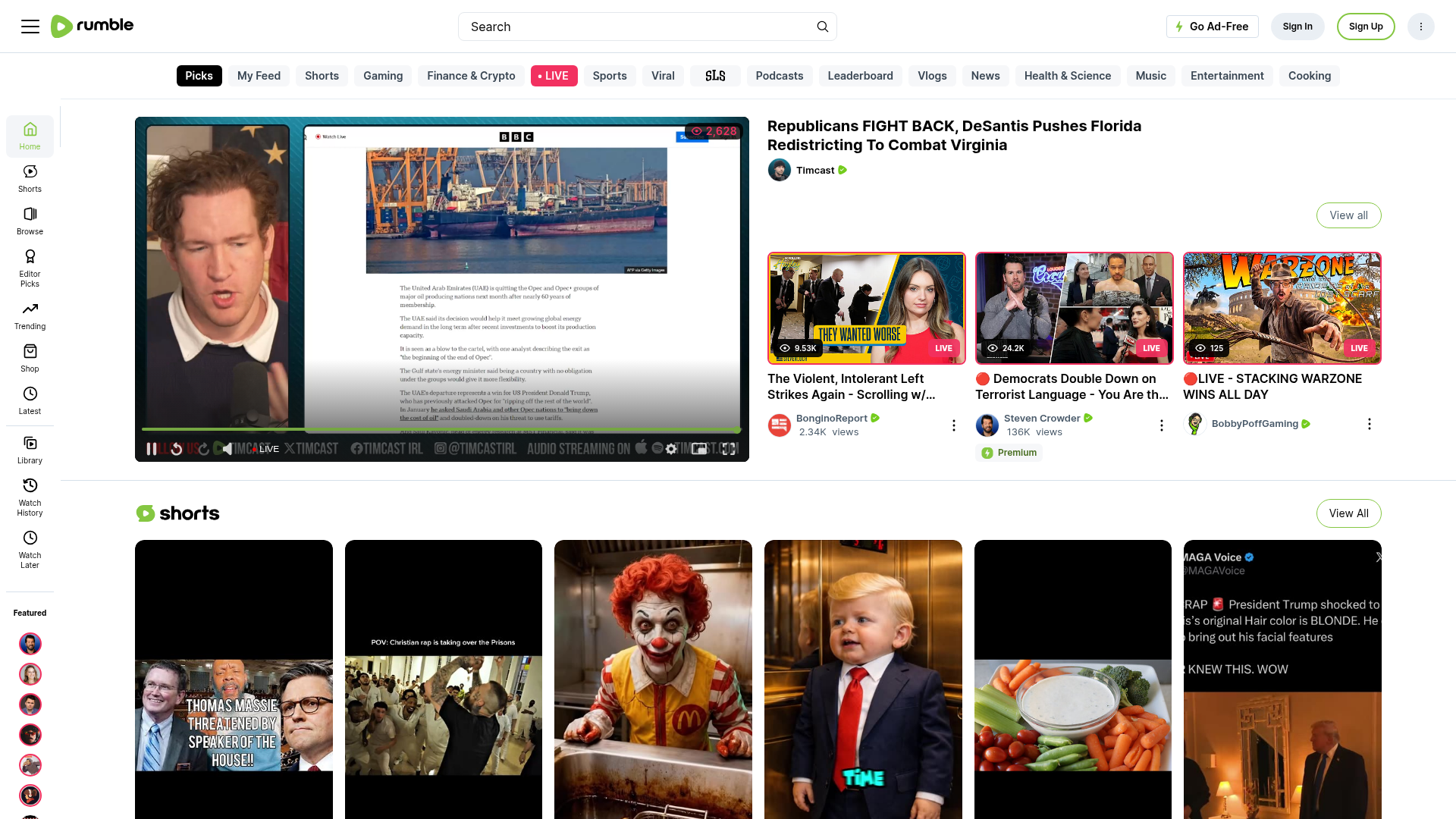
Every creator who relies entirely on YouTube knows the risk — one policy change, one demonetisation, one algorithm shift and months of income can disappear. Rumble has grown significantly as a cross-posting destination for creators who want a second platform without starting from zero, and who want a revenue stream that isn't entirely at YouTube's discretion.
How Rumble pays creators. Rumble shares ad revenue with creators and has historically offered a higher percentage split than YouTube's standard. There are different licensing options — you can upload exclusively to Rumble for more revenue, or share rights while cross-posting to YouTube. Most creators start with cross-posting and evaluate performance before considering exclusivity deals. Rumble also has a subscription feature and direct licensing deals for high-traffic content.
The content moderation difference. Rumble positions itself as having lighter content restrictions than YouTube — content that gets demonetised or suppressed on YouTube often performs and earns on Rumble without issue. Whether that's relevant to your content depends entirely on what you make. For commentary, news, opinion, and politically adjacent content especially, having a second platform where your content isn't penalised is a practical consideration.
The cross-posting strategy. The practical starting point for most creators is simply cross-posting existing videos. Upload the same content to both YouTube and Rumble, let it earn on both, and see where the Rumble audience engages. Cross-posting takes minutes once you have a channel set up, costs nothing, and means you're building a second audience and income stream from the same content you're already producing.
Audience size and discovery. Rumble's audience is significantly smaller than YouTube's global reach. If your content depends on massive discovery volume, YouTube remains the more important platform. The Rumble argument isn't about replacing YouTube — it's about not being exclusively dependent on it. Even modest additional revenue from a second platform adds up, and having a built audience elsewhere means you're protected if your primary platform ever becomes hostile to your content.
Who Is It For?
Creators who want to diversify beyond YouTube and aren't comfortable having a single platform control all their video income. Commentary, news, opinion, and independent journalism channels where content moderation is a real concern. Any established creator looking for a second revenue source from content they're already producing.
Best Niches to Use With
Pros and Cons
What Works Well
- Higher revenue share than YouTube's standard
- Cross-posting is free and takes minutes
- Less content restriction on most content types
- Growing audience and monetisation options
- Diversifies income away from one platform
Worth Knowing
- Much smaller audience than YouTube
- Discovery algorithm less developed
- Exclusive deals mean leaving YouTube revenue
- Community features are still maturing
The Bottom Line
Rumble won't replace YouTube, and that's not the point. The argument for Rumble is simple: you're already producing videos, cross-posting costs nothing, and having a second platform with a second income stream is straightforward risk management. Start with cross-posting, check what earns, and build from there. If you're in a niche where YouTube's content policies have ever affected your earnings, that argument becomes even more concrete.