
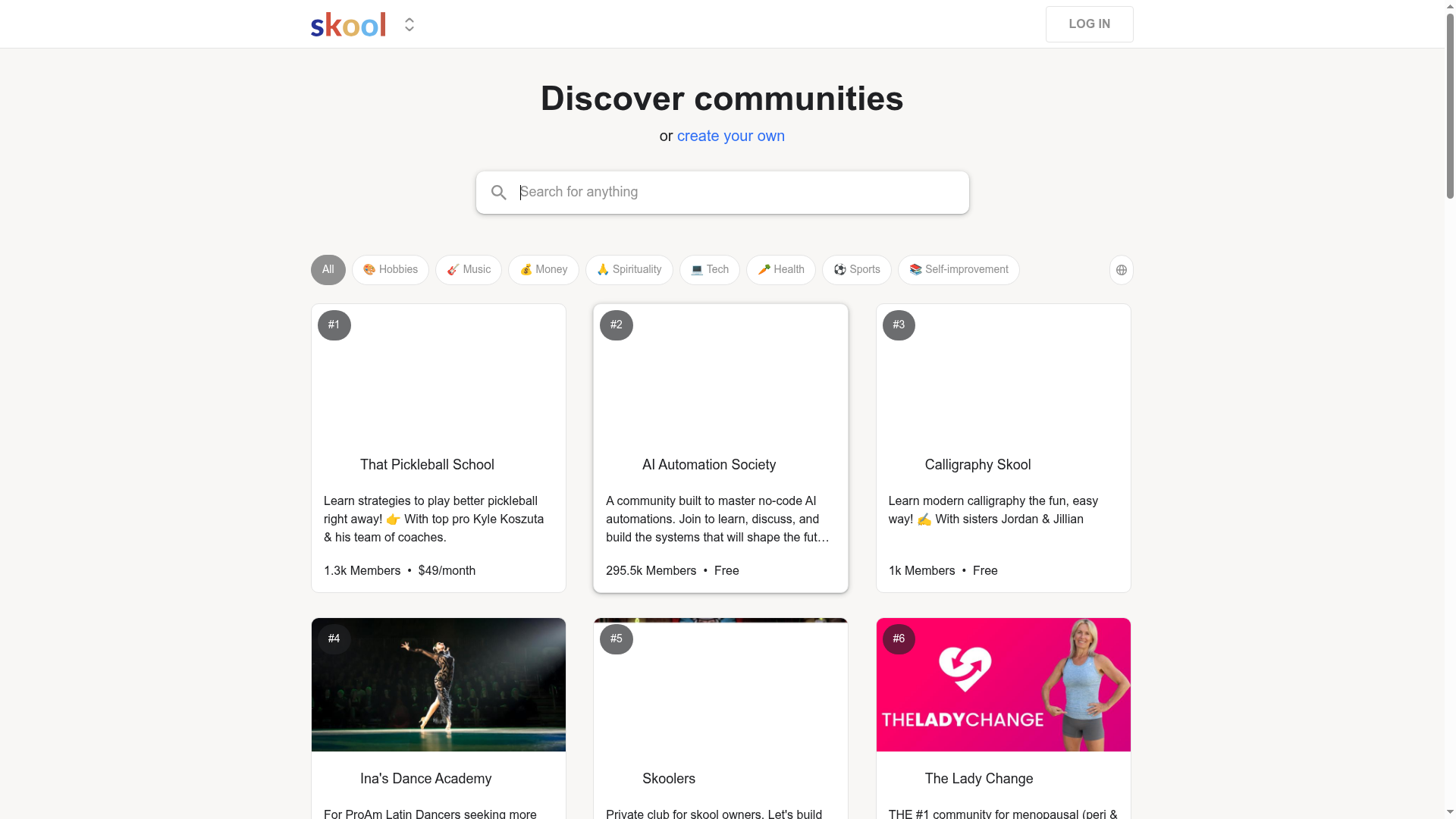
Many creators try to build communities on Facebook Groups, Discord, or Slack while hosting courses on a separate platform — which creates a fragmented experience for members and an administrative headache for the creator. Skool solves this by combining both into a single, clean interface with simple pricing and no revenue cuts on memberships or courses.
Community feed. a dedicated space for members to post, comment, and interact daily
Courses. host structured video courses with drip content and completion tracking
Gamification. leaderboards and points systems to reward participation and drive engagement
Events. built-in calendar and event scheduling so you never lose members to external links
Flat $99/month pricing. no transaction fees on memberships or course sales
Simple member management. see who's active, who completed courses, and how members engage
Who Is It For?
Creators, coaches, and educators who want to build paid community-based learning experiences — combining a community platform, online courses, and member engagement features in one place. Skool suits creators who already have a following and want to monetise through a structured paid community rather than a one-off product.
For creators who want to sell standalone courses without the community layer, dedicated course platforms like Teachable or Kajabi are better fits. Skool's community-first model adds most value when the interaction between members is part of the learning experience.
Pros and Cons
- ✅ Combined community + courses in one platform
- ✅ Gamification keeps members engaged
- ✅ Clean, mobile-friendly interface
- ✅ Affiliate programme for community referrals
- ❌ Monthly fee per community even with members paying
- ❌ Less flexible course builder than dedicated course platforms
- ❌ Community-first model does not suit every course format
Pricing
Skool charges $99/month per community to host. This is separate from what you charge your members.
Summary
Skool is a strong choice for creators who want a single platform combining online learning and community without stitching together multiple tools. The gamification and community features drive engagement that standalone course platforms cannot replicate. The $99/month community cost is the main consideration — justify it with a clear monetisation strategy before launching.