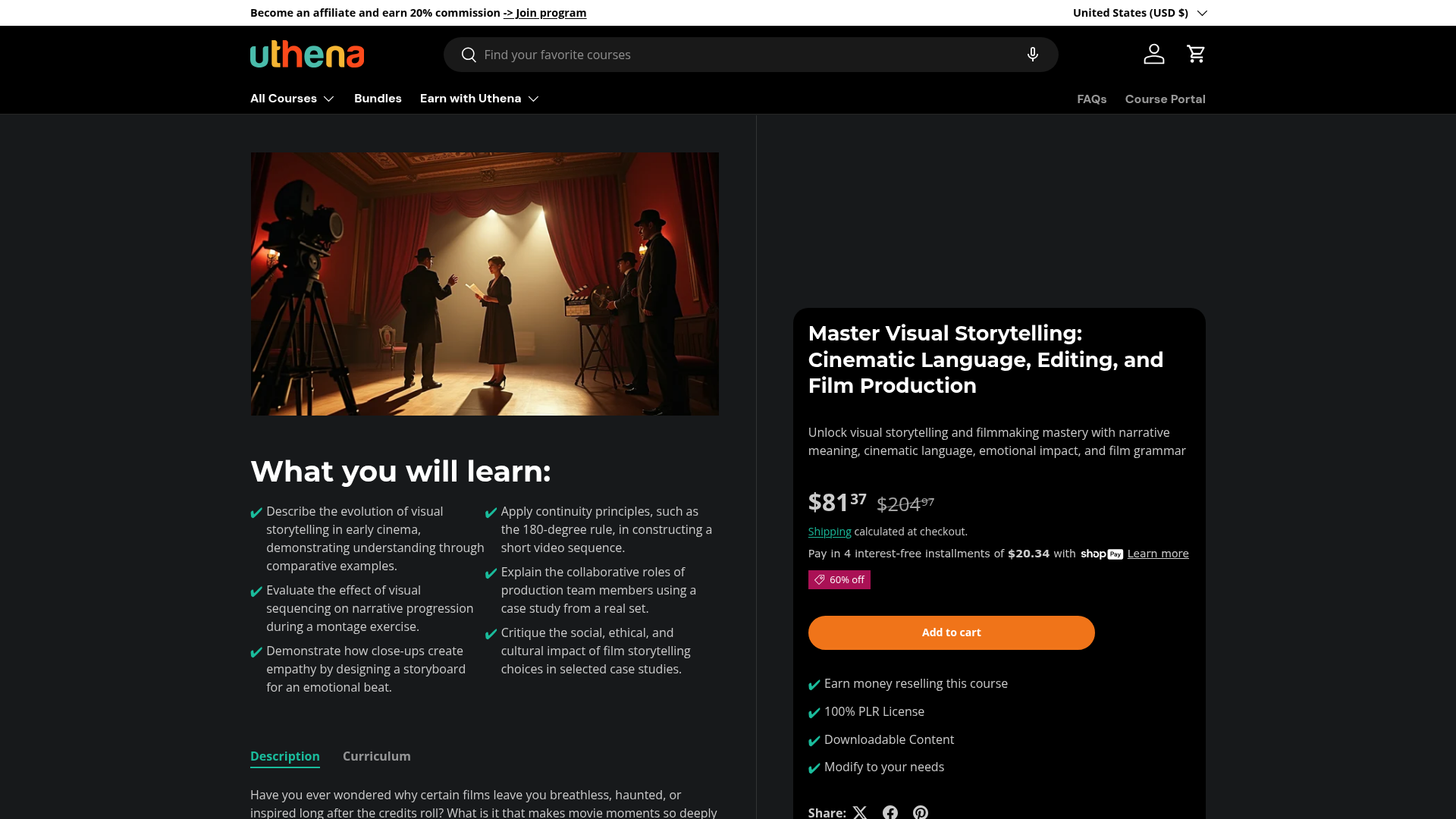
Have you ever watched a film and felt genuinely moved, then watched a YouTube video on the same topic and felt nothing? The difference isn't budget — it's visual language. The way shots are composed, sequenced, and timed creates an emotional logic that viewers feel even when they can't articulate why.
This course teaches exactly that. It covers the evolution of visual storytelling in cinema, how continuity principles like the 180-degree rule work in practice, how montage creates narrative meaning, and how close-ups create empathy. You'll also look at the collaborative roles of production teams and the ethical responsibilities of film storytelling.
What You'll Learn
- ✓ The evolution of visual storytelling in early cinema through to modern film
- ✓ How to apply continuity principles like the 180-degree rule in your own videos
- ✓ How visual sequences create narrative progression and emotional meaning
- ✓ How close-ups and shot choices create or destroy viewer empathy
- ✓ The collaborative roles of production team members on a real set
- ✓ The social, ethical, and cultural impact of film storytelling choices
Who Should Take This
- → Content creators who want their videos to feel more cinematic and intentional
- → Filmmakers and video producers wanting to understand the language of cinema
- → Editors who want theory to back up their technical skills
- → Anyone interested in selling a premium film theory course (full PLR rights)
If you've ever wanted your videos to feel like they were made by someone who actually understands film — not just software — this is the course. Cinematic language is a learnable skill, and once you see it, you can't unsee it. That changes how you shoot, how you edit, and ultimately how your audience experiences your content.